A Protesting Guide for Immigrants
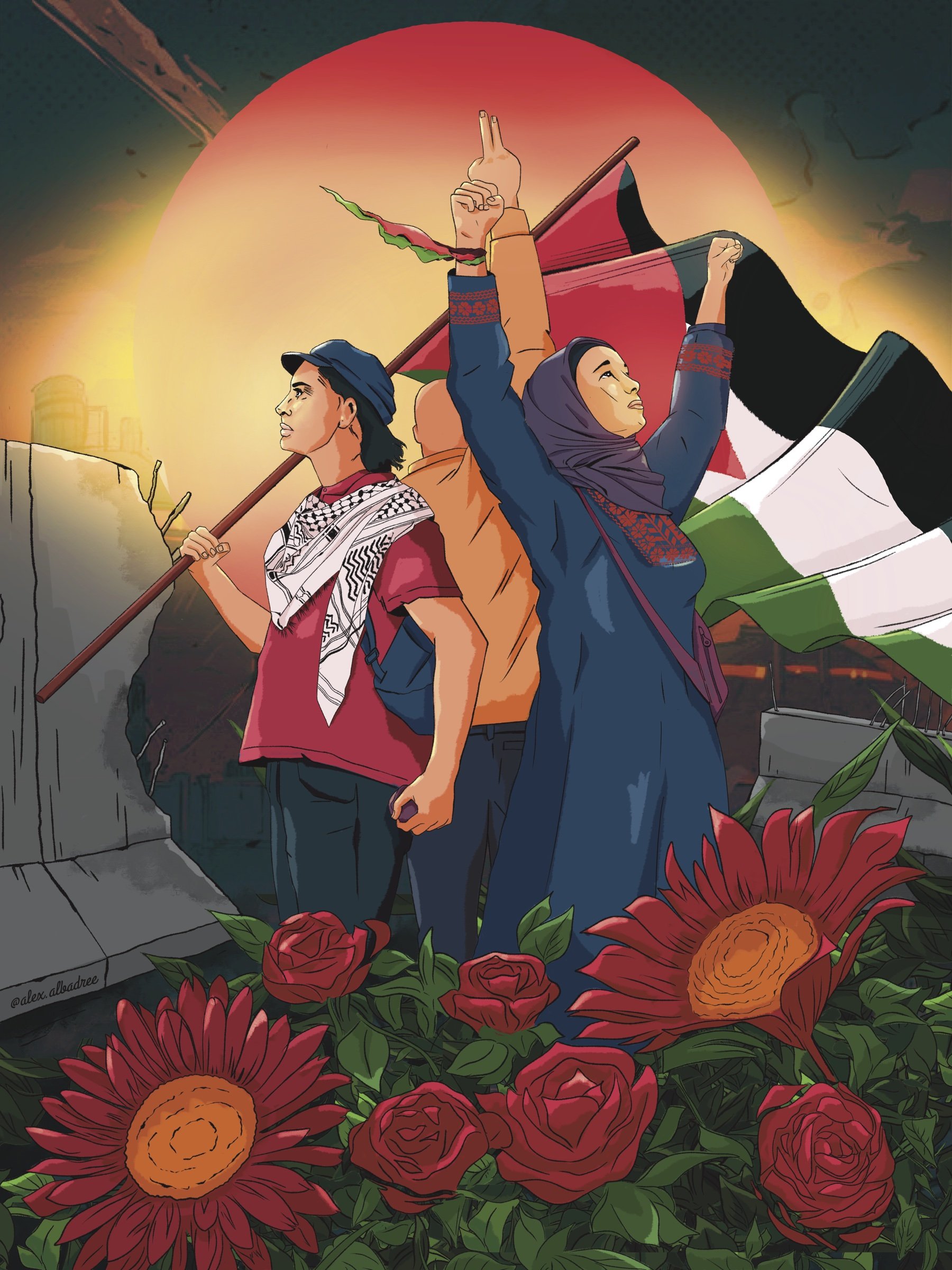
People around the world are taking to the streets in the form of marches and protests to express their support for the people of Palestine and against the oppression of Palestinians by the State of Israel. If you are an immigrant and wondering whether you can participate in these demonstrations, the short answer is yes, but there are a few more things to keep in mind in order to participate safely and avoid potential issues with law enforcement and immigration authorities.*
Please note that this is not intended as legal advice. We recommend you consult with an attorney about any specific questions as everyone’s situation is unique.
*On January 29, 2025, U.S. President Donald Trump signed an executive order which seeks to deport non-citizen college students and others who have taken part in pro-Palestinian protests. People who are present in the US with only a temporary visa should exercise caution and be aware that the administration may try to revoke your visa if you are associated with political speech that the administration considers “anti-semitic”, which unfortunately includes pro-Palestinian protests.
1. Free Speech
Free speech applies to everyone in the US regardless of immigration status. That means that citizens and noncitizens alike have the right to participate in protests to exercise this right.
2. Law Enforcement and Immigration Authorities at Protests
There will often be local law enforcement presence during marches and protests, which can be very stressful. And sometimes the immigration authorities such as the Department of Homeland Security (DHS), US Customs and Border Protection (CBP), and Immigration & Customs Enforcement (ICE) will also be there. For example, this is a common occurrence during Black Lives Matter protests, another large political movement in the US. Their presence in itself should not raise alarm, but it is important to know this is a possibility to avoid surprise.
3. Right to Remain Silent
If you find yourself being questioned by any law enforcement authority, you have the right to remain silent and refuse to answer anything they ask. It is recommended that you memorize a phrase, such as, “I know my right to remain silent and I am choosing to exercise it.” That way, you don’t have to think about what to say in the moment.
4. Providing Identification
Although you don’t have to speak to law enforcement, some states require you to identify yourself. Make sure you know what your state’s rules are about this. If asked for identification, you may present any state-issued form of identification.
5. Do Not Lie to Law Enforcement
It is important that, no matter what, you do not lie or provide any false information to law enforcement or provide fake documentation as this can get you in more trouble than not saying anything at all.
6. Do Not Answer Questions about Immigration
Keep in mind that even if you are asked, you are not required to answer any questions about your immigration status, country of birth, date of birth, date of entry into the U.S., or any other immigration-related questions.
7. Your Right to Refuse to a Search
You also have a right to refuse a search of your person and belongings, unless there is probable cause. Probable cause applies when there is information to believe that a crime has been committed. You might want to remember the phrase: “I do not consent to a search of myself or my belongings.” Although officers should respect this right, it is important that you do not resist a search.
8. Your Right to a Lawyer
If you are arrested or detained for any reason, you can invoke your right to speak to a lawyer. Once you have stated your desire to speak to a lawyer, you should remain silent.
9. Avoid Arrests
Any interaction with local law enforcement can lead to interactions with immigration officials, so make sure that you are as peaceful as possible and follow local rules and laws during protests. This can help you avoid common charges, such as “disturbing the peace,” “failure to disperse,” and “unlawful assembly.” Arrests of any kind can cause complications when you apply for immigration benefits in the future.
10. Understand Who You Are Supporting
Knowing the difference between support for a group of people or an idea (legal) and support for terrorist organizations (illegal) is crucial. For example, support of Palestinians as a group of people is protected by the First Amendment. Hamas, however, is a designated terrorist organization. Even though some people have been equating support for Palestinians with support for Hamas, it is important to not let this confusion prevent you from expressing your support for people separate from Hamas. Support for Palestinians does not equal support for terrorist groups.
11. Have a Safety Plan in Mind
When getting ready to attend a protest, you should know which organization or group organized the protest, as well as have the organizers’ contact information, if possible. Know the route where the protest will take you and identify potential emergency exits in case you want to suddenly leave. You should consider leaving your mobile device at home or, at least, turn off facial and fingerprint recognition to minimize the possibility of law enforcement accessing your devices without consent. It is always a good idea to memorize the name of a trusted emergency contact you can call in case you find yourself in trouble. In the Bay Area, there are groups who can help you pay for bail so you can be released from jail. The Anti Repression Committee operates a fund, and if you are in jail, you can call (415) 285-1011 (the National Lawyers Guild) for assistance.
12. Carry “Know Your Rights” Cards
It can be useful to carry a few Know Your Right Cards with you in case you ever encounter law enforcement at a protest, at home, or anywhere else. All people in the United States, regardless of immigration status, have certain rights and protections under the U.S. Constitution. These cards, created by the Immigrant Legal Resource Center (ILRC), allow you to reference your rights and easily present them to law enforcement instead of directly speaking to them. You can print your own cards in English, in Spanish, and other languages.
In conclusion, participating in peaceful protests is a right protected by the First Amendment for all individuals in the United States, but it is important to be aware of potential challenges for noncitizens. Understanding your rights is a good way to prepare before heading out to a demonstration. By staying informed and doing your research, you can exercise your right to advocate for justice while minimizing potential risks to your immigration status.
We repeat: Please note that this information is not legal advice, and consulting with an attorney for personalized guidance is recommended.
Oasis Legal Services stands in support of all peoples around the world to live freely and as their authentic selves, and supports mutual and collective peace. This has been and will always be core to Oasis’ mission and values.