Know Your Rights
How to Stay Safe in Interactions with ICE and Where to Find Help
At Oasis, we know that many LGBTQ+ immigrants feel fear and anxiety around immigration enforcement. You are not alone. We are committed to protecting, supporting, and uplifting our communities.
This guide outlines the rights everyone has in the United States and provides practical steps to help our communities stay safe.
This information is for general education and not legal advice.
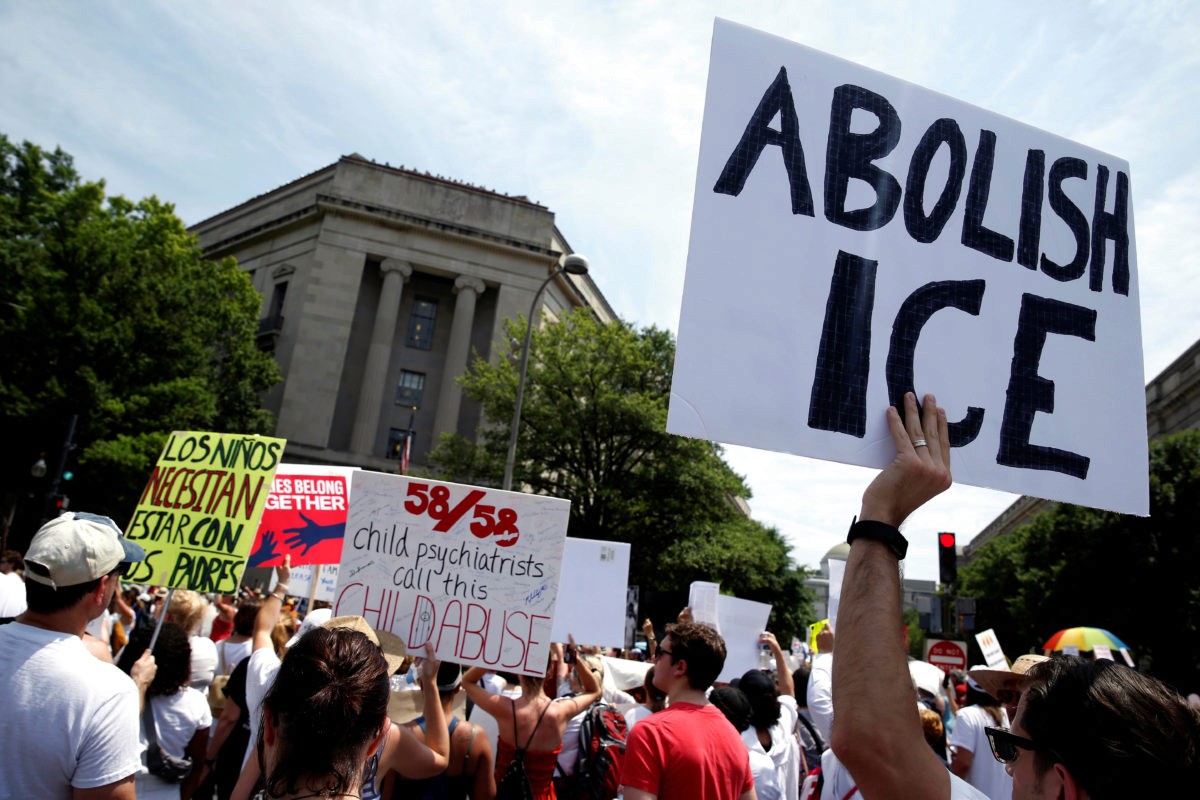
Photo Credit: REUTERS
Your Rights in Any Interaction with ICE
Everyone in the United States, regardless of immigration status, has rights under the Constitution.
ICE can only arrest someone if they have probable cause that a person is not a U.S. citizen and is subject to detention or deportation. It is always ICE’s responsibility, not yours, to show that they have this authority.
Your key rights include:
You have the right to remain silent. You do not have to answer questions about where you were born or how you entered the country.
ICE officers often rely on people not knowing their rights. Clearly stating “I am choosing to remain silent and I want to speak to an attorney,” can discourage further questioning.
You have the right to refuse to sign documents. Do not sign anything before speaking with an attorney.
You have the right to leave if an officer says you are not under arrest.
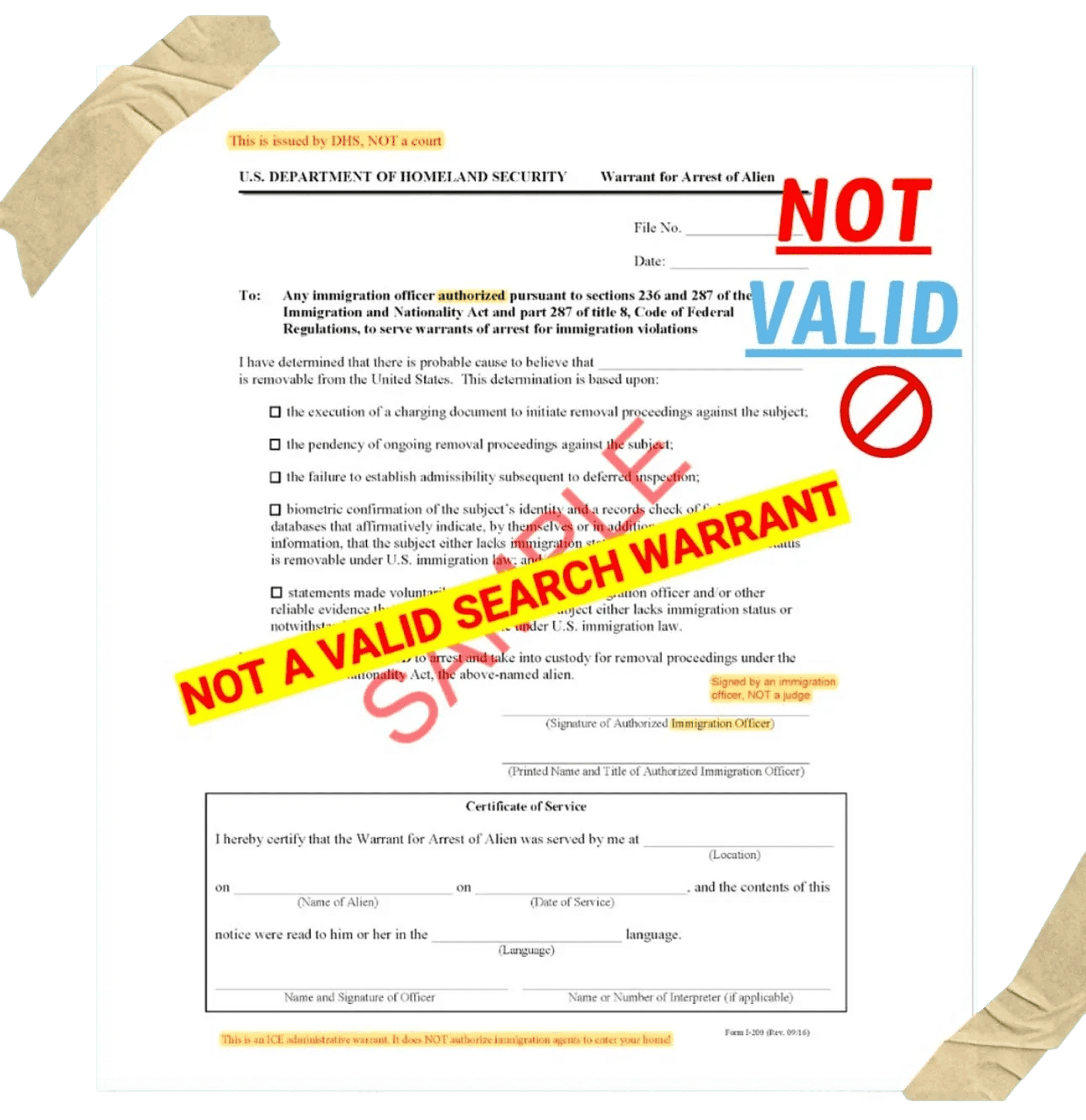
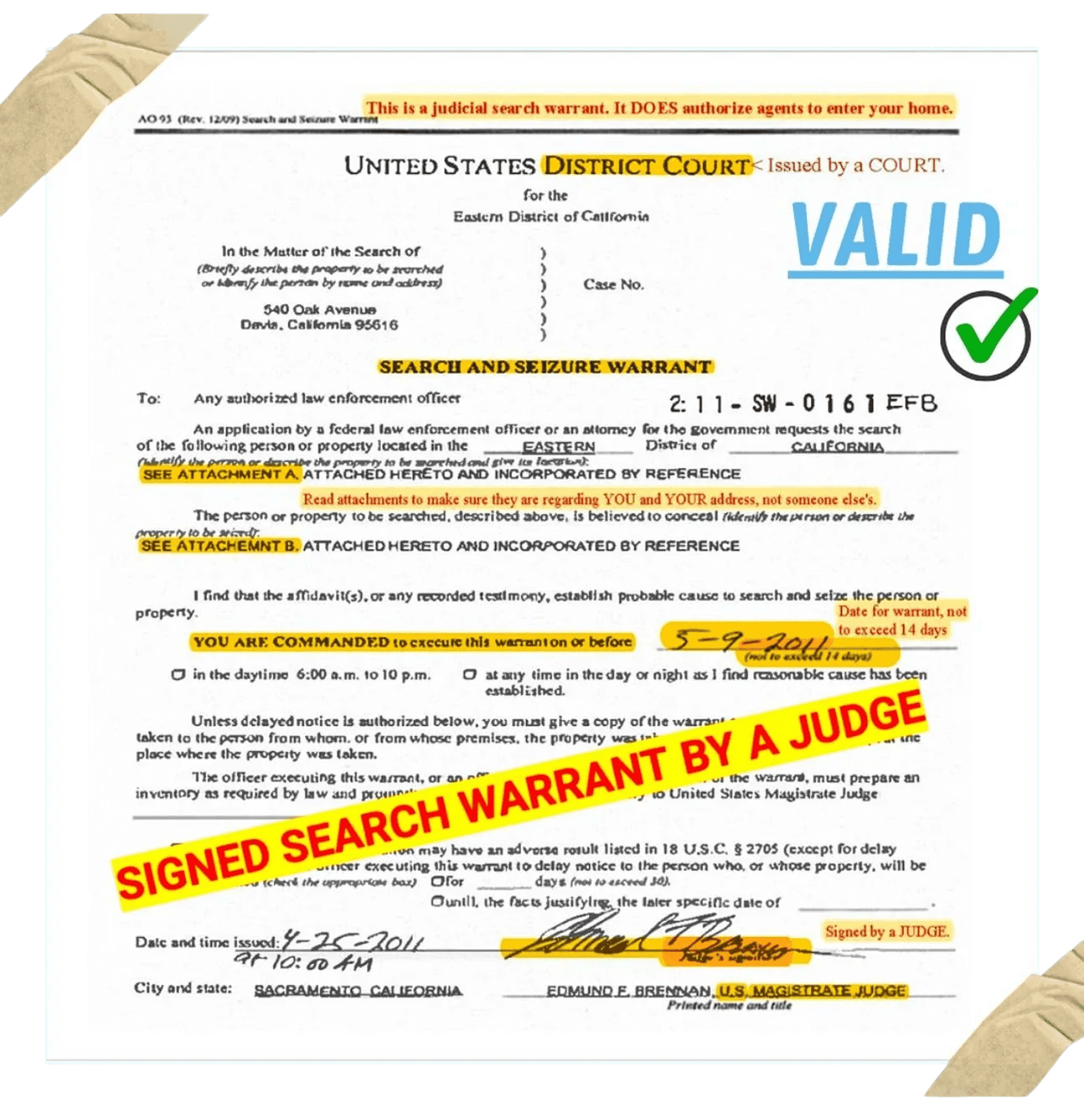
You do not have to let ICE into your home without a valid warrant signed by a judge and with the correct name.
You have the right to speak to a lawyer. The government does not provide attorneys for immigrants, so you will need to find your own.
If ICE forces their way in or detains someone, do not resist. Call a rapid response hotline for support immediately.
If ICE Comes to You
If ICE comes to your home
You do not have to open the door unless ICE shows you a valid judicial warrant.
A valid warrant must be signed by a judge and have the correct name; an administrative warrant signed by an immigration officer is not sufficient (Payton v. New York).
Ask officers to show the warrant through a window or under the door.
If you are unsure whether a document is valid, take a photo and send it to a rapid response hotline.
If ICE stops you in a vehicle
Before speaking ask: "Are you the police?” • “Are you immigration?” • “Why am I being pulled over / stopped?”
You do not have to roll your window down fully.
Drivers must show a license and registration.
You do not have to answer questions about immigration status or place of birth.
Passengers have the right to remain silent.
Ask if you are under arrest. If not, you may leave.
ICE cannot search your car without a valid warrant signed by a judge or permission. You do not have to give permission.
If ICE comes to your workplace
Stay calm and do not run.
Do not provide false documents.
You should not sign anything without speaking to an attorney.
You have the right to remain silent.
Keep important numbers with you. If you are an Oasis client, give the ICE agent your caseworker’s number and tell them that they can call your attorney to verify that you have a pending asylum claim. If you are detained, call a rapid response hotline as soon as possible.
Your Rights Based on Your Immigration Status
Documents Safe to Carry
Green Card
Work Permit
Receipt showing pending immigration application
Municipal ID, State ID, or Driver’s License if:
(a) Was issued in the United States
(b) Contains no information at all about your country of origin
(c) Access your important documents in an emergency.
Ask a local immigration advocate about what kind of documents are safe to carry in your area.
Other Documents We Recommend Carrying
Evidence of current lawful status in the United States if you have it.
A “red card” to exercise your right to remain silent in case you are stopped or interrogated by ICE or police officers.
Telephone number of someone who can:
(a) Put your plans and wishes into place
(b) Call your immigration attorney, and
(c) Access your important documents in an emergency.
Proof you’ve lived in the U.S. more than two years:
(a) Such as mail that you received at your home address with a postmark
(b) A signed lease
(c) Church or school records with your address, etc.
You may want to carry copies with you to avoid the risk of losing your originals. Share this evidence if / after you have been taken into custody.
As of January 21, 2025, DHS expanded expedited removal for those unable to prove two years of presence.
Documents You Should Not Carry
Passport or documents from your country of origin
Consular ID cards
Any false identity documents or false immigration documents
If You Are Arrested by ICE
Do not sign anything before speaking to a lawyer.
Ask to contact your attorney or caseworker.
If you are LGBTQ+ and fear persecution, say it clearly and repeatedly.
If You Have a Pending Asylum Case
Carry a copy of your asylum receipt notice and work permit.
Carry your attorney or caseworker’s phone number.
Tell officers you have a pending asylum case.
Refuse to sign anything until speaking with your lawyer.
Clearly state you are afraid to return to your country of origin.
If You Are a U.S. Citizen
ICE does NOT have the right to detain or arrest U.S. citizens. If ICE tries to detain or arrest you:
Tell them that you are a U.S. Citizen .
Ask to speak to a lawyer.
Ask for the agent’s name and badge number (and write it down).
Consult a lawyer about filing a lawsuit: Go to iAmerica.org for a list of legal service providers.
Safety Planning and Prevention
Family Preparedness Plan
If you are undocumented, it is a good idea for you to have a family preparedness plan ready in case you or a family member is detained.
Find a trusted legal services provider in your area and schedule an appointment for a legal consultation and understand your options for immigration relief and how to stay safe in the U.S. A strong preparedness plan includes:
Choosing a trusted caregiver for your child.
Sharing medical and emergency contact information.
Making sure family members know how to use the detention locator info.
Providing your A-Number to trusted contacts.
Consulting a legal services provider to understand your options.
Keeping your consulate’s contact information.
Immigration Rights Red Cards
“Red Cards” are created by the Immigrant Legal Resource Center for people to carry as a reminder of their rights as a person in the United States. Red cards can also be given to law enforcement to invoke your right to remain silent or attempt to stop them from entering your private space.
You can give the Red Card to an immigration agent if they try to talk to you.
You can show your Red Card through a window or slip it under the door to an immigration agent who comes to your house without a warrant.
To print your own cards, visit: www.ilrc.org/red-cards. If you are an Oasis client and would like us to send you a Red Card, please contact your caseworker.
Examples of Documents ICE Might Show You
To come inside your home, agents should have a warrant signed by a judge. ICE typically has an administrative arrest order, but this is NOT a judicial arrest warrant.
Keep in mind that ICE typically does NOT have a warrant signed by a judge, but they expect most people to not know the difference to trick people into allowing them into their home. Therefore, please study these images carefully so that you are informed if ICE shows up to your home.
Not Valid
Valid
Community Support and Legal Help
Rapid Response Hotlines • Call For Help and Report ICE Activity
ICE has harmed U.S. citizens and continues to intimidate our immigrant communities. Several rapid response networks have created hotlines for people to report ICE activity in their area, get more information about any rumors regarding ICE, and receive support in case they are detained.
There are many local hotline numbers depending on your location. Click below to find the hotline for your area.
Immigration Legal Services Directory
To search for services in another geographic location in the United States, use this general directory by Immigration Advocates Network.
Oasis Official Resource
Your Right to Protest as an Immigrant
Immigrants can participate in protests. To do so safely, review Oasis’s guide to preparing for protests and understanding your rights during demonstrations.
How U.S. Citizens Can Be Allies
Effective allyship includes:
Joining ICE watch networks.
Reporting ICE sightings to hotlines.
Sharing accurate information rather than unconfirmed rumors.
Printing and distributing Red Cards.
Taking pictures or videos of ICE officers and their vehicles, as well as their badges. Learn more about your right to take pictures and record video by location.
Reminding others of their rights.
Record officers, if safe, and noting badge numbers.
Contacting legal organizations when someone is detained.
The information on this website is for general informational purposes only and is not legal advice. Viewing this site or submitting information through our forms does not create an attorney–client relationship. An attorney–client relationship is only formed after both you and a legal representative have signed a written agreement for representation.